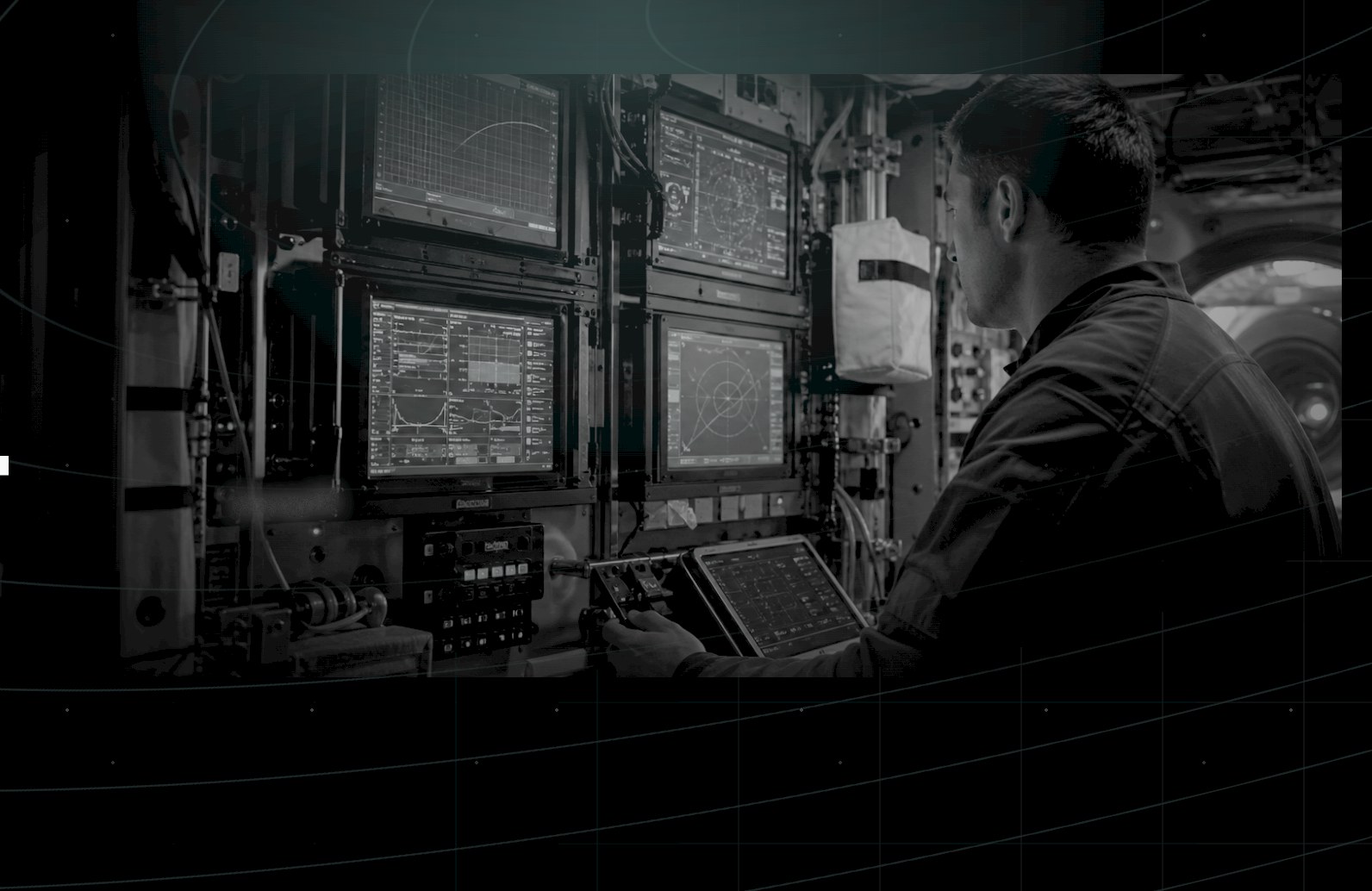
ThermoIR Compiler
Device-independent compilation to the optimal backend.
Platform
EnergyIR turns mission workloads into low-energy onboard execution paths, then reports the energy, quality and proof record behind every result.
Platform architecture
EnergyIR is built around measurably lower-energy computation. For spacecraft, that becomes an end-to-end platform: compile the workload, schedule it under mission constraints, run it close to data, and produce evidence.
Device-independent compilation to the optimal backend.
Mission-aware scheduling, energy and fidelity management.
Maximize data residency. Minimize movement.
Cryptographic certificates for every computation.
Developer and mission interface
Ground teams should be able to test workloads through familiar interfaces, compare energy and quality tradeoffs, then freeze an execution path that can survive spacecraft constraints. The EnergyIR platform model gives developers a controllable surface without hiding the physics.
mission.load("eo-triage")
  .set_budget(power="tight", latency="real-time")
  .compile(targets=["software", "PB64", "CLAS16"])
  .run(onboard=true)
  .certify() -> result + energy + proof
Interface contract
Expose workloads through familiar API or SDK patterns during ground testing, then freeze the compiled path for the flight target.
Set acceptable fidelity, latency and energy limits so the runtime can choose the lowest-energy route that still satisfies the mission.
Return energy, data movement, timing, backend and caveat metadata alongside the result.
Export signed artifacts for post-pass review, procurement evidence or independent verification.
Onboard execution loop
The platform is designed for the mission moment when raw data is abundant, downlink is scarce and waiting for Earth creates operational risk.
Payload, bus or navigation data enters the local compute loop.
EnergyIR decides which work deserves full processing, approximation, deferral or discard.
Runtime maps work to available CPU, GPU, PB64, CLAS16 or resident-memory paths.
Result, backend, fidelity, energy and caveats are recorded as mission evidence.
Downlink the decision, priority data or certificate instead of raw noise.
Integration model
Identify the mission loop, target model, data movement, fidelity requirements and operating envelope.
Run representative workloads through software baselines, benchmark harnesses and EnergyIR candidate paths.
Select CPU, GPU, PB64, CLAS16 or hybrid execution depending on energy, latency and verification requirements.
Package runtime controls, telemetry hooks, fallbacks and proof artifacts for mission software.
Document measured results, projections, caveats, repeatability and verification path before operational use.
Benchmark and proof layer
Every result says which hardware path ran, what was measured, what was projected, what caveats apply and which certificate can be checked later. Measured savings and proof are the discipline the platform is built on, and the spacecraft stack keeps it explicit.
Mission fit
The brief is the right next step for technical teams evaluating compiler interfaces, onboard runtime constraints, hardware fit or certificate requirements.
Trust signals